NIVALIS
Project Name
NIVALIS
Industry
Game development
Timeline
18 Months

Overview

For 2 years and 3 months, I worked as a voxel artist on NIVALIS, the upcoming and highly anticipated successor to CLOUDPUNK.

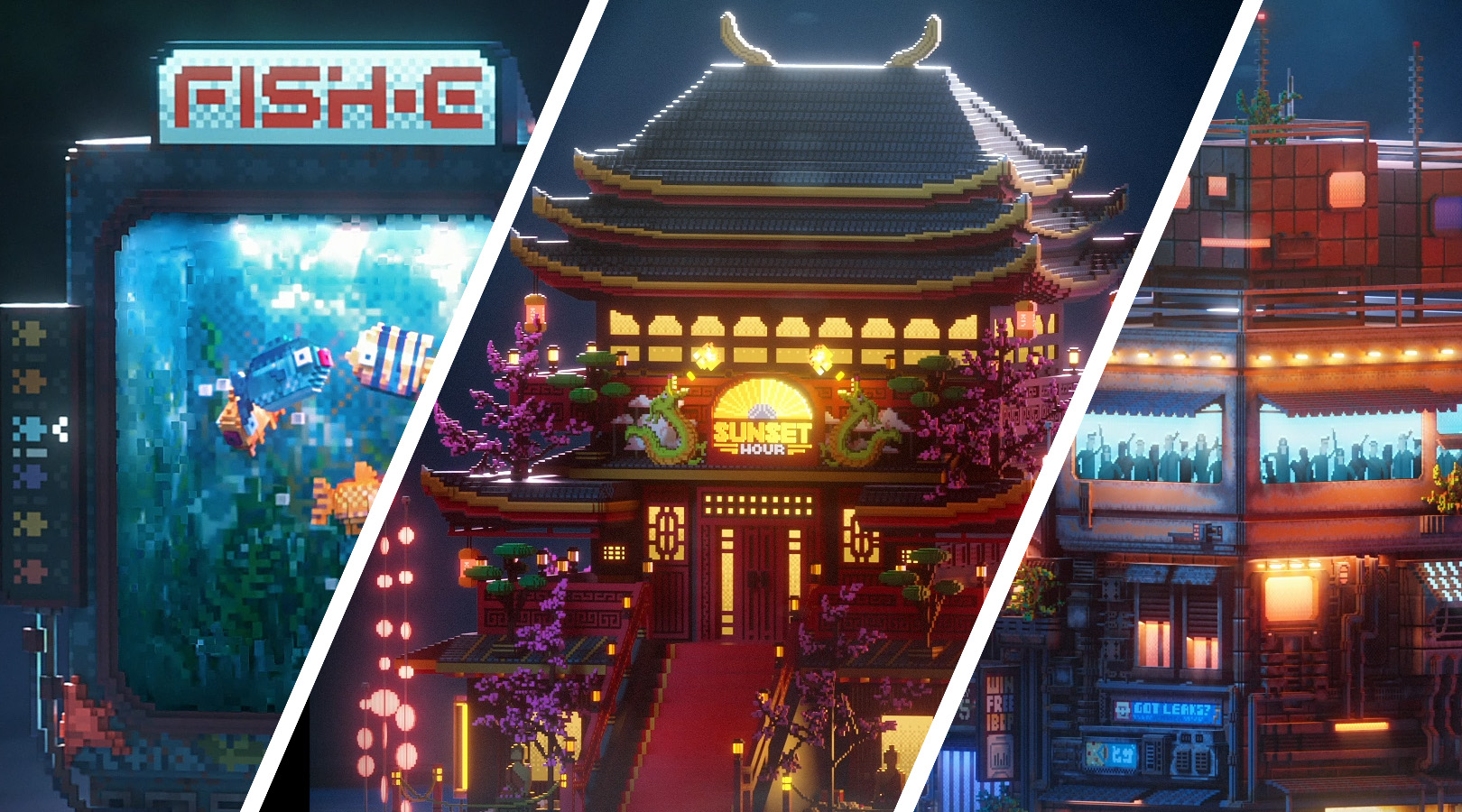
My role was to create voxel-based game assets, mostly buildings and props. While the vast majority of what I made is still under a strict NDA, I was allowed to share a small handful of pieces. In the videos below, you can see three of the assets I worked on. I also tried to bring extra life to my work through subtle 3D and 2D-style animations when it made sense, with the goal of making the world feel more alive without pulling attention away from gameplay.

Working in voxels pushed me to get genuinely comfortable with pixel art, because voxel art is essentially pixel art in 3D. Over time, I became confident creating pixel-based mock ads and signage to dress up my buildings inside MagicaVoxel, which ended up being one of my favorite parts of the process.

Overall, it was a super gratifying experience, and I’m hoping I can share more of the work in the near future.
Problems I faced

Balancing detail with game constraints
Because these assets were built for a real-time game world, I constantly had to balance visual richness with performance needs. Voxel art is not exactly known for being topology-efficient, so adding “just a bit more detail” could quickly turn into heavier assets than the game could comfortably afford.

Making small details readable at a distance
A lot of the charm of voxel environments comes from tiny touches, but those details can easily get lost once the camera pulls back or the player moves quickly through a space. The challenge was making assets feel dense and lived-in while still reading clearly in motion.

Working within strict palette and material limitations
Being limited to 256 colors, plus having separate PBR values per color index, forced me to treat every single color slot like it mattered. I couldn’t just add new colors endlessly to solve problems. Every index had to earn its place, especially when trying to introduce more nuance, texture, and variation.

Pixel art learning curve
Creating believable in-world ads and graphics was harder than I expected at first. It is one thing to make a voxel building look good, it is another to make tiny pixel signage feel intentional, readable, and stylistically consistent.

Adding motion without causing visual noise
I love adding subtle movement to assets, but it can easily become distracting, repetitive, or visually loud in a game environment. The trick was finding animation ideas that enhanced the vibe without becoming the first thing your eye goes to.

Solutions

I focused on “smart detail,” not maximum detail
Instead of brute-forcing complexity, I leaned into clever shape language, silhouettes, and selective surface detail. If a detail didn’t read or didn’t add to the overall feel, it didn’t make the cut. That mindset helped keep assets performant while still feeling rich.

I designed for readability first, then layered in flavor
I treated distance readability like a baseline requirement. Once the main forms and big value groups worked, I added the smaller touches, like panels, accents, and props, in ways that would still hold up when seen in motion.

I became intentional with the 256-color and PBR workflow
I learned to make careful, deliberate use of color indices and material values. Instead of constantly reaching for new colors, I reused indices strategically and relied on PBR tuning to create variation and separation. That helped me squeeze more perceived detail out of a limited palette.

I leveled up my pixel art to support the voxel work
After plenty of trial and error, I got comfortable producing pixel-based mock ads and signage that fit the world and could be dropped onto buildings cleanly in MagicaVoxel. That skill made my assets feel more grounded and more “real,” even within a stylized voxel aesthetic.

I used subtle animation to make the world feel alive
When animation made sense, I kept it restrained and purposeful, more like ambient world-building than a feature. You can see that approach in the shared examples, where movement adds life without dominating the scene.

cart-logo
0